
WET SCRUBBER
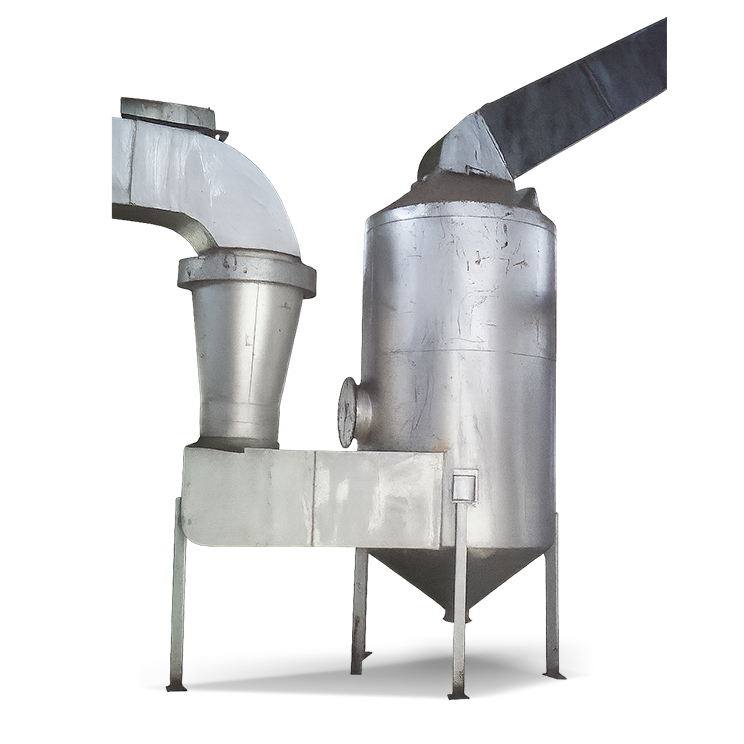

Industrial Wet Scrubber
Balkrishna Boilers provides high-performance Venturi Wet Scrubbers, engineered to capture fine particulate matter and neutralize hazardous gases from industrial exhaust streams. Our scrubbing systems are the ideal solution for facilities requiring robust air pollution control, high-temperature gas cooling, and strict environmental compliance.
How the Venturi Scrubber Works
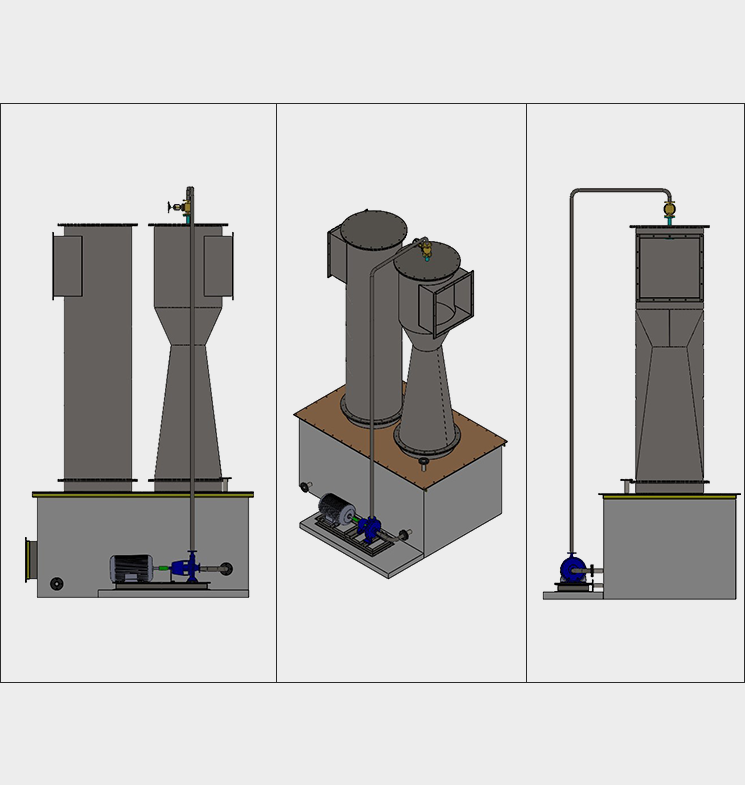
The Venturi scrubber utilizes a specialized tube with a narrow "throat" section to maximize collection efficiency.
Wet Scrubbers are most often used
- Acceleration: As dust-laden air enters the Venturi throat, its velocity is rapidly increased to 15,000–20,000 feet per minute.
- Atomization: Scrubbing liquid (typically 4–6 gallons of water per 1,000 CFM) is injected at the throat. The high-velocity air shears the liquid into extremely fine droplets.
- Collision & Capture: The high differential velocity between the dust particles and the water droplets ensures that even sub-micron particulates are trapped within the liquid slurry.
- Separation: The clean air then passes through a Mist Eliminator, which removes entrained droplets before the air is discharged. The captured pollutants are directed to the scrubber outlet as slurry.
Key Features & Advantages
- Particulate Matter (PM) Removal: Highly effective at capturing dust, fly ash, soot, and "sticky" particulates that might clog traditional dry filters.
- Acid Gas Neutralization: By introducing chemical reagents (such as lime slurry or sodium hydroxide), our scrubbers effectively neutralize SO2, HCl, and other acidic combustion byproducts.
- Multi-Pollutant Control: Capable of absorbing Nitrogen Oxides (NOx), volatile organic compounds (VOCs), and heavy metals through chemical absorption.
- High-Temperature Handling: Unlike fabric filters, wet scrubbers can treat high-temperature and high-humidity air streams, providing simultaneous cooling and heat recovery.
- Compact & Cost-Effective: Wet scrubbers feature a smaller installation footprint and lower initial capital costs compared to large-scale electrostatic precipitators (ESP).
Industry Applications
Our Wet Scrubbers are essential for operations where air quality and safety are non-negotiable:
- Chemical Processing: For the absorption of hazardous gases and chemical reactions during scrubbing.
- Mining & Minerals: To separate explosive or combustible solids from air streams.
- Foundries & Metal Processing: For the removal of fine metallic dust and cooling of furnace exhaust.
- Pulp & Paper: To manage high-humidity emissions and capture odorous compounds.
- Waste-to-Energy: For flue gas desulfurization and acid gas control in boiler systems.
| Specification | Unit | WS-320 | WS-450 | WS-600 | WS-750 | WS-900 | WS-1100 | WS-1300 |
|---|---|---|---|---|---|---|---|---|
| General | ||||||||
| Steam Boiler capacity | Kg/hr | 1/2 to 3/4 TPH | 1 to 2 TPH | 3 to 4 TPH | 5 to 6TPH | 7 to 8 TPH | 10 to 12 TPH | 15 TPH |
| Flue gas Inlet Temperature | °C | 150 | 150 | 150 | 150 | 150 | 150 | 150 |
| Flue gas Inlet | MM | 200 | 350 | 500 | 650 | 800 | 1000 | 1200 |
| Flue gas outlet | MM | 200 | 350 | 500 | 650 | 800 | 1000 | 1200 |
| Water Circulation Flow | M³/Hr | 1 | 2 | 4 | 6 | 8 | 10 | 12 |
| Pump Head | Miter | 20 | 20 | 20 | 20 | 20 | 20 | 20 |
| Pump Power | HP | 1 | 1 | 2 | 2 | 3 | 3 | 5 |
| Water inlet Pipe | MM | 25 | 40 | 40 | 50 | 50 | 65 | 65 |
| Bottom Water Tank RCC | RCC | |||||||
| NOTE: In view of constant endeavors to improve our products, we reserve the right to alter or change above specifications without prior notice. | ||||||||
Frequently Asked Questions (FAQ) about Industrial Wet Scrubber
The Venturi scrubber is specifically designed for high-efficiency collection of fine sub-micron particles. The high velocity in the throat creates a high-energy collision between dust and water, making it far more effective for fine soot and ash than standard spray towers.
Yes. Wet scrubbers are often the preferred choice for handling explosive or flammable solids (such as aluminum or magnesium dust). By trapping the particles in water, the risk of a secondary dust explosion is virtually eliminated.
Absolutely. After the scrubbing process, the air is saturated with fine water droplets (mist). The mist eliminator prevents this moisture from exiting the stack, which prevents "pluming" and ensures that only clean, dry air is released.
The slurry is collected at the bottom of the scrubber. Depending on the industry, this slurry can often be treated and the water recycled back into the system, or the captured solids can be reclaimed for reuse in other parts of the production process.
Yes. Wet scrubbers act as excellent heat exchangers. As the hot flue gas comes into contact with the scrubbing liquid, it is cooled significantly. This feature is often used in boiler systems for heat recovery and to protect downstream equipment.